
Don’t Blame the Virus: we are prisoners of our minds
I begin this essay by proposing a bold statement: The coronavirus pandemic is a test to determine what can be pushed onto an unsuspecting public after the virus no longer attracts news headlines. More specifically, the reactions of people throughout the western world since the imposition of borderline autocratic, clearly undemocratic laws and fines could easily become a template for how far governments can push even more draconian impositions onto our hard won social and economic freedoms. In essence, our fundamental human rights are at stake. Short of an overt military takeover, it is difficult for Western governments to determine how far they can push their citizens without invoking a hostile civil rebellion.
In what follows, I am mindful of not wanting to promote another conspiracy theory; instead, I make a reasoned attempt to forewarn readers of the potential to allow complacency to give way to undesirable political and economic tyranny. My concern arises from the knowledge that a fine line separates genuine democratic freedoms from the promise of equality for everyone that so alluringly disguises the dangerous pathway to socialism and totalitarianism. The words “we should never take our freedoms for granted” and “we should understand that with those freedoms come great responsibilities” should always remain uppermost in our minds.
Anyone who reads even a modicum of history gains an awareness of the continual struggle between freedom and tyranny. Socialist states start off with a dream or ideal to make life better for the worker, the downtrodden, the disadvantaged, and the poor. The mantra is equal distribution and opportunities for all. The reality is that ultimately, utopian hopes morph into an oppressive totalitarian regime where the freedoms and rights of the individual are forcefully removed and a privileged minority control all the power and wealth.
I am also reminded of the words: I cannot prove you are being malevolent, but “when I see a bird that quacks like a duck, walks like a duck, has feathers and webbed feet and associates with ducks — I certainly have good reason to assume that it is a duck.” This insight leads to the purpose of this essay.
The question that needs to be asked is why is there a repeated propensity by the federal and state governments in Australia to over react to events and disasters and then use the purported ‘unprecedentedness’ of each incident to introduce increasingly strict laws and penalties that rarely if at all, are removed when the so-called disaster is over? Is the coronavirus pandemic another example or is it the case in this instance that the laws and penalties are justified? Certainly, just on what we have witnessed in various states across Australia in relation to the types of ‘infringements’ that are attracting severe fines, the rapid shift from relatively benign and reasonable use of power to what appears to be an overbearing authoritarian power imposition has been frightening to say the least. Time will tell if there are reasons to be fearful.
If what we have witnessed were accompanied by a clear plan to move beyond the control of the virus toward economic strategies, jobs, business recovery, and reinstatement of what most people would consider normal life, then we could derive some comfort from the fears we are currently grappling with. However, such a plan has not been put forward either for open scrutiny or to reassure a very unsettled and rightfully panicked public. In the absence of a plausible exit strategy, scepticism and suspicion quickly fills the void and one is not out of line to ask what is really going on even why.
The remainder of this essay explores the credibility of these concerns. First, I would like to step back from the what ifs and the conjectures around what is really going on and focus on what has happened so far. From this it is hoped, the answers may become more apparent.
Yes, it appears there is a virus that is killing people in many countries around the world. What that virus is and where it came from are not known at this point in time. The unspoken contradiction is that it is not killing as many people as the common flu did in past years. During 2017 for example, 1,255 deaths occurred in Australia due to influenza, which amounts to a death rate of 5.1 per 100,000 persons. In contrast, the coronavirus (covid19) has caused 3.6 deaths per 100,000 persons (circa 900), yet when the influenza virus was prevalent, no lockdown was enforced.
The anomaly however, is that since the announcement of the ‘pandemic’, the number of deaths due influenza dropped to zero (0).
The Lancet journal reported that before covid19, the unemployment rate was around 5% and is now optimistically projected to go up to 10%, an increase of 5%. For every 1% increase in unemployment, there is a 1% increase in suicides. Australia has about 3000 suicides per annum, which relates to an additional 150 deaths or around double the number of Covid19 deaths to the end of March. Second, Australia has about 1600 deaths per year due to drug overdose. A study by the National Bureau of Economic Research finds that for every percentage increase in unemployment, there is an extra 3.3% drug overdose fatalities or 264 deaths.
Therefore, for a 5% increase in unemployment, another 400 plus deaths per annum will occur in Australia. This figure does not include any consideration of deferred cancer (and other diagnostic) testing, delayed ‘elective’ surgery, and the real probability that government will be required to reduce spending in the post-coronavirus era, including drugs covered by the Pharmaceutical Benefits Scheme (PBS).
On March 16, 2020 the Sydney Morning Herald reported: “Under the best case scenario of a 20 per cent infection rate, about 50,000 people out of 5 million infected with Covid19 would die. A moderate scenario of 10 million infections, 40 per cent of the population, would mean 100,000 dead. In a worst case scenario, 15 million people would get the coronavirus and 150,000 would die.” On March 25, eminent epidemiologist Professor Tony Blakely stated that with luck, 60% of the population would become infected and 30,000 people would die. The professor was talking about an assumed Infection Fatality Rate (IFR) of only 0.2%, at the same time the WHO was claiming an IFR of ten times that figure.
This heightened level of unfounded hyperbole and the resultant panic inducement was typical of many main stream publications. As was the appalling aggrandisement and wildly exaggerated claims published during the recent bushfires (including blatant attempts to establish climate change as the primary cause), so too did the media spawn a crisis out of the coronavirus spread based on speculative models inflamed with repeated incitements to expect a worst-case scenario.
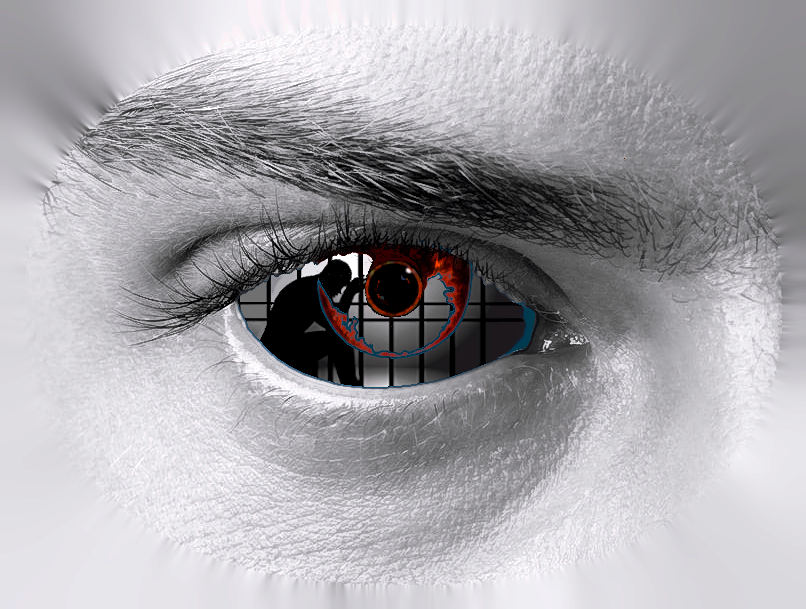
Almost overnight, homes throughout the western world became a vast, virtual prison. It would be otherwise impossible to lock up the numbers that are currently being coerced and in some instances forced to self-isolate at home. The virus has proved to be a perfect solution to the question of what to do with countless millions of potentially uncooperative and rebellious citizens. Without realising it, everyday Australians permitted ever increasing restrictions on their freedoms and rights, to the point of blindly clinging to false notions of democracy and freewill regardless of what is actually happening in front of their eyes at the hands of their governments and corporations. They blindly succumbed to voluntary control.
Sadly, outside of their favoured interests and fleeting entertainments, this propensity can also be attributed to the tendency of most people possessing little or no idea nor do they care much about what has been shaping their lives since the day they were born.
When people fear for their lives, most willingly comply to government directives without resistance. Even families can be easily separated through such impositions. Onerous fines and jail terms bring into line the few that attempt to break the unexpectedly imposed and uncomfortably unfamiliar laws. The virus has provided the perfect opportunity to establish the ultimate cost-effective confinement; one that is without bars, guards, rifles, searchlights, and guard dogs. It cost nothing to build and can be expanded or contracted in size and lengths of time (incarceration) at will.
Suburbs and regions serve as convenient boundaries on which to enact laws for restricted movements and activities. No arrests, no convictions, and no police are required to make it happen. Even armies are not needed for this exercise apart from filling in where needed such as the provision of medical services. Look closely however, as only Christian leaning populations are being quarantined – muslim, black, and anti-western groups around the world are openly permitted to congregate and flout the curfew laws.
The current pandemic has worked so much better than global warming as a controlling technique and its flawed successor, the climate emergency. After all, is it not far more effective to manufacture an apparently real and immediate ‘end of the world’ or ‘the end is nigh’ scenario in order to scare all rationality out of ‘ordinary’ folk. The thought of such a horrific prospect has clearly made up for the ground that was lost due to the increasing scepticism and resistance to the global warming / climate emergency claims. Has a trend emerged in the way disasters and catastrophes are used to incite fear and compliance?
Why wasn’t this tactic implemented earlier? It is certainly far more coercive than any previous ruse has proven to be. After all, too many sceptics and too much annoying pesky facts blocked the way forward. Who is going to argue with a killer virus? Perhaps only those who believe they are immune or protected by a god. Of course, several trial runs at running false flag virus scares over the years has worked wonders in preparing peoples’ minds once a ‘more virulent’ virus spreads throughout communities.
Thereafter, varying virulence levels, symptom variations, and immunity outcomes inevitably cause further confusion and reinforce ongoing compliance to future control measures without the risk of too many deaths occurring in too short a time. To add to the panic, every third or fourth day we see reports of an impending follow on wave that will be even more devastating than the first. Conversely, we also see videos delivered by doctors and nurses telling us that not every death is due to Covid19 and that many deaths are the result of over use or inappropriate use of ventilators that irreversibly damage patients’ lungs.
To muddy the waters even more, we have witnessed the announcement of several explanations for the cause and origin; the World Health Organisation (WHO) proclaiming inconsistent and untimely messages; and, reports on a high-level pandemic scenario exercise that was held at the Johns Hopkins Centre in New York for Health Security in partnership with the World Economic Forum and the Bill and Melinda Gates Foundation on October 18, 2019 (Event 201). It is well known that Bill Gates has actively funded and promoted vaccine programmes for more than decade.
See: Here for further details and Here and Here
In Australia, vaccines are not generally mandatory, but there are a few exceptions. The Federal Government introduced a No Jab No Pay policy that withholds three state payments: Child Care Benefit, the Child Care Rebate and, as of 2018, the Family Tax Benefit Part A end of year supplement for parents of children under 20 years of age who are not fully immunised or on a recognised catch-up schedule. Fines are imposed on childcare centres that admit unvaccinated children.
As of 01/05/2020, “every single person entering an aged care home (residents excluded, but visitors, contractors, workers, external health professionals included) must have had their 2020 Fluvax. The care facilities will require proof and there are no exceptions. This is now the law in every Government-funded aged care home in Australia, introduced to keep our aged residents safe”. The question naturally arises: at what point will all Australians be required to accept a mandatory flu injection?
As reported in the second link above, the next obvious step is to track every individual in return for limited freedoms. After being confined in one’s home for several weeks and months, the idea of being allowed to venture down to the park or beach seems akin to an international holiday. Already we see an immediate acceptance of the COVIDSafe app, which as of 29/04/20 (within three days after it was released) 2.8 million people have downloaded and registered for the government’s coronavirus tracing app.
Should anyone wonder, it is a small stretch to foresee the enforced acceptance of a vaccine passport or even an all-purpose id chip implanted under the skin. Either method is a perfect solution for tracking an individual’s movements and to ensure they cannot buy or sell anything without the unique identifier supplied by app or the chip. Ultimately, what the Australia card and the Medicare card could not do, an id chip will furnish the final, most effective and useful solution. The bonus of course is that the ever present nuisance of using cash will be eliminated as will the perennial bug bears of black markets and money laundering that all governments have strived to suppress for decades. Has this been the goal since 9/11?
The best part is that not only is an app passport or a chip a permanent digital record of all your movements and connections established in real time, no identity passport or travel permit needs to be issued and renewed. Much like the now accepted digital registration ‘sticker’ for our motor vehicles. However, before this eventuality becomes evident, a mobile phone or a plastic card will at least serve to accustom people to the idea of a vaccine passport.
Then there are the unfolding revelations that scientists in the US, Australia, and France have been linked to the Wuhan Laboratory in China over the past four to five years (or so). What is now evident is that unknown to most of the world there is a history of experimentation with bat viruses. So far, all involved deny the possibility of the coronavirus leaking from the laboratory. Already, news has been published of US$3.7 million plus a further US$3.7 million for an additional six years of research on bat coronaviruses in the Chinese lab has been provided by the US for research that would “enhance the ability of bat coronavirus to infect human cells and laboratory animals using techniques of genetic engineering.” Does this not suggest the development of a man-made virus?
The history that is unfolding around the virus, although inconclusive, at least points to the notion that we have not and are not being told the full story. Remember the duck logic at the beginning of this essay? Why has so much been ad hoc in its implementation, particularly across Australian states; why the legislations on the fly; why have they been so overboard in enforcing penalties and their consequences; what do governments know that they are not telling us; and yet, why the many parallel actions throughout all Western countries?
Are not the types of scenarios and the potential consequences we have recently witnessed the responsibility of government departments and agencies that we rely on to protect our needs and safety? Are they not charged with investigating and determining suitable strategies and procedures for identifying and controlling the potential outcomes? Isn’t this what we have been paying them for? Otherwise, what have they been doing with taxpayers’ funds when it is known that they attend endless conferences, conduct simulations, travel overseas to consult with experts so that they might gain ‘invaluable’ insights into how best to manage catastrophes and pandemics?
Then there is the inexplicable refusal to permit any degree of relaxation when hard data proves that the crisis has peaked or even that there may have been no genuine crisis from the outset. As if in complete agreement, Australian governments have given the impression that they prefer to wait to see if the trusting population would accept what they are told without appreciable resistance and for how long after it has passed would they continue to believe in the crisis. The added bonus is that the trial and error approach of climate change as a means to gain control is immediately replaced with a method that is guaranteed to lock in everyone’s attention.
Just as quickly as the pandemic emerged, there will be a day when it all seems to disappear overnight. The required level of damage to people’s psyches and emotions will be deemed to have been done and people will be permitted to resume their shattered lives as best they can. Notwithstanding the fact of course that a massive debt has been generated, which no doubt will take years, if not decades to resolve.
So, at this moment, the reader may be reflecting on the preceding paragraphs as pure conjecture. If there did not exist a long track record of lost freedoms, I would be very open to correction and perhaps, just criticism. Please bear with me for a little longer. The point I want to emphasise is that to take the current context and only examine it in isolation from a wide range of manifestly related factors foolishly limits our understanding of the longer term and its forgotten implications.
If we as legally rightful citizens do not pay attention, the virus scare may become the final piece of the puzzle that could feasibly bury our rights for a very long time. Already we have lost so much of the freedoms and rights that our forefathers gave their lives for over the past century or so. Consider too, that not only have our freedoms been eroded, our common morals and precious Australian character and culture have also been subjected to severe beatings. To make matters worse, with the advent of the virus, no-one can argue that for many, their long-term financial and economic well-being has been significantly damaged.
For decades, we permitted a series of curious reinterpretations by the High Court and questionable transfers of powers by premiers to the Federal government, all the while undermining our founders’ intentions for a cooperative federation of sovereign states. Even before the virus ‘hit’ our shores, governments across Australia had undermined the rights and freedoms of assembly, movement, religion, free speech, private property, and trade and commerce through a disastrous combination of economically harmful free trade agreements, repressive anti-terrorist, anti-discrimination, anti-racial, anti-civil liberty, anti-free speech, meta-data and surveillance laws, and a dogged determination not to prevent or at least condemn the cruel and poisonous use of political correctness.
For those who believe that a socialist democracy is the answer to all our problems and fears, think again. The more likely goal waiting at the end of our current pathway is tyranny. Trading freedom for the illusion of security is foolishness at its best. Mindless ignorance and involuntary compliance at its worst. Such thinking assumes our leaders distinguish between right and wrong and have only the best interests of the people and the country in mind. Outright totalitarianism is what awaits all of us, hitherto cleverly disguised as a benevolent ‘democracy’ right up to the point where all will realise it is too late to turn back.
In short, I suggest that the people of Australia have collectively sat back in comfort and allowed our politicians to commit treason in so many ways that it has become almost impossible to keep track of all their deplorable actions. There many reasons for this claim, not the least of which include a very small subset of well documented facts presented hereafter. There is no need to take my word for what follows: look each one up for yourselves. For ease of understanding within the lifetimes of most readers, it is sufficient to go back to the Whitlam years.
Multiculturalism
During the 1970s, “multiculturalism” was adopted as official government policy in Australia. In examining the lead-up to the issue of a reference paper titled “A multi-cultural society for the future” by the then Minister for Immigration Al Grassby in 1973 (under the Whitlam Government), and the subsequent establishment of the Federal Department of Labour and Immigration in 1974, and the enactment of the Racial Discrimination Bill of 1975, it is now possible to discern that what occurred in locked rooms and secret meetings at that time adversely changed Australia forever. This outcome is evident is several ways as outlined below.
Anti-racial and Anti-discrimination laws
The Racial Discrimination Act 1975 prohibits discrimination on the basis of race in a variety of contexts. Passed by the Whitlam government in 1975, the act was amended in 1995 to include the introduction of Section 18C. This action made it unlawful to carry out an act in public that is likely to offend, insult, or humiliate a person or group of people on the basis of their race, colour, nationality, and ethnicity.
The establishment of Section 18C was controversial and has continued to cause disagreement. Opponents say that it unreasonably curtails freedom of speech, while supporters say it is necessary to discourage racial vilification and promote a society free of racism. The problem is that anti-discrimination laws now adjudicate on whether complainants feel humiliated and whether the perpetrator intended to offend. More concerning is the fact that government bureaucrats can investigate the emotions of the complainant and the inner thoughts of the offender.
Today, there is considerable debate over whether Section18C is needed. The main points of contention are that it: is a restriction on the human right to freedom of speech and an attack on human dignity; undermines democracy; is inconsistent with a peaceful and cohesive society; punishes defendants through an unfair process; is partially redundant; undermines attempts to combat racism; and, is unconstitutional.
Coupled with the pernicious thought control effects of political correctness, the legal enactment of racial discrimination laws has proven to be a powerful force for stifling free speech and limiting the ability of ordinary people to live, express, and enact their views in a free, democratic society. Therefore, it is not just free speech that is being controlled; it is their thoughts and actions for fear of unfair prosecutions and at times deprivations, reputational damage, loss of employment, and societal punishments.
Despite the assurances and repeated rhetoric around the notion of racial equality for all Australians, it has become clear that the ongoing attempts to institute affirmative action have not been due to validated exceptions to the rule of law. Instead, the undeclared aim has been to codify racial inequality within the legal framework of discrimination law and affirmative action. In other words, the current codified bigotry of the Racial Discrimination Act and the unchecked censorship of dissent legitimised through Section 18C directly contravene the principles of equality and fairness upon which the Western world was established.
What we can rightly see here is that minority rights have been substituted for universal human rights, subjectivity for objectivity, and political correctness for free speech. Ultimately, if no-one is allowed to say anything that deviates from Government and legally policed parameters, then speech is not free at all.
Surveillance laws
History tells us that governments that give themselves extraordinary powers in times of emergency tend not to relinquish them. It took less than three years for metadata laws to be passed in the name of counterterrorism arising out of the 9/11 incident for example, to be subsequently invoked by local councils to police minor infringements like littering.
In 2015, the Coalition government introduced new laws that required telco companies to retain customers’ data for two years. Only 22 law enforcement agencies could use the data without a warrant to pursue people reasonably suspected of committing serious crimes such as terrorism. Critics warned this would lead to serious infringements of privacy, which would in time extend well beyond the jurisdictions of the designated agencies. Since the law was passed, more than 80 different agencies have tried to gain access to our data most with no role in pursuing serious crime. This included a request from Fairfield City Council to use data to find and fine someone who dumped rubbish.
In 2016, the Queensland Crime and Corruption Commission revealed that public officials had unlawfully accessed government databases. One police officer was guilty of 50 hacking offences. Twelve staff from the Australian Taxation Office was sacked in 2017 for unauthorised access of private tax records. In a statement made in 2019, ACT Police revealed 116 unlawful metadata requests detailed in a report tabled in parliament are the tip of the iceberg. A further 3,249 requests were made from 11 March to 13 October 2015 without valid authorisation.
Internet companies also reported that councils and 87 other agencies that should not have access to the data did so over 8,000 times in the 2018-19 financial year. Although law enforcement agencies were required to obtain special warrants to access journalists’ metadata, the AFP failed to comply in one well known instance involving the ABC. In one year alone the AFP accessed the metadata of journalists 58 times. Other agencies obtained the history of websites visited by people despite this purpose being ruled out by the government five years ago.
See: Here for further details and Here
Media and political correctness
For contemporary Australian society, political correctness (PC) did not take hold until the introduction of multiculturalism. As of 2017, PC is well and truly entrenched as a means of imposing psychological and emotional abuse, and control. Certainly, many authors think the relationship between the two doctrines is not accidental. There is a sound basis to posit that political correctness was and is the means to establish multiculturalism.
Because of political correctness, many news reports have appeared around the country that describe how Christmas and Easter traditions have been cancelled and of Christmas decorations not being put up in public places and schools. Nativity scenes are no longer set up in primary schools for fear of committing ‘culturally insensitive behaviour’. These impositions on traditional Australian ceremonies are due to the pressures exacted on ordinary Australians by proponents of political correctness. The main offenders are the self-proclaimed arbiters of free speech, the main stream media (MSM).
Read the pages of any newspaper or login into any social media website and we constantly witness double standards and hypocrisy from the self-appointed all-knowing, infallible, left-wing elite (hereafter referred to as the ‘quasi-elite’), who arrogantly presume an automatic right to utilise political correctness as a means of coercion and control. These same elites do not hesitate to subject anyone who contradicts, opposes, or even questions their ideology to stereotyped and cruel labels such as racists, sexists, misogynists, environmental vandals (“climate deniers”), homophobes, white supremacists, and even neo-Nazis.
Increasing police and intelligence agency powers
Up to March 2020, the number of substantive anti-terrorism laws enacted by parliament adds up to 82 since the September 11 attacks, with a further six bills either currently before parliament or about to be introduced. These numbers far exceed the combined volume in the United Kingdom, Canada and the United States in response to same event.
In the years since 9/11, Australia has experienced significant shifts in its traditional legal frameworks. The federal government’s ‘hyper-legislative’ response to the global war on terror has proven to be only the beginning of such shifts. Through the interplay between hard-line law and order policy platforms in the states and territories, and High Court cases that were claimed to lend constitutional legitimacy to extreme measures, Australia has witnessed a multidimensional migration and normalisation of anti-terror laws to new contexts. As a result, the ever expanding data monitoring and retention schemes have markedly eroded the privacy of everyday citizens, including children being inadvertently caught in the wide net.
Ordinary citizens are increasingly impacted by Australia’s national security laws through a web of legislation that is ever more intricate and complex. One law means you could be fined up to $4200 if you refuse to pull out your ID for a police officer in an airport, or even comply with a direction to move along. Another extends ASIO’s questioning and detention powers for an extra year. These powers were originally introduced following the September 11 terrorist attacks to assist intelligence agencies identify and counter threats of terrorism in Australia.
More recently, with the advent of the coronavirus, police across the country are handing out onerous fines in excess of $1,000 at a time when unemployment has dramatically increased by tens of thousands, for ‘committing’ simple acts such as eating a kebab alone on a park bench, fishing or boating, posting photos of last year’s holiday on Facebook, church services banned at Easter time, washing cars, sitting in cars, teaching your daughter to drive a car, and driving around without somewhere to go deemed “essential” by government experts.
See: Here for further details and Here
The Lima Agreement
The Lima Declaration is an agreement between Western European countries to de-industrialise. In Australia, the local supply and manufacture of goods that had peaked during the 1960s ended as a consequence of The Lima Declaration and accompanying Plan of Action that called for the redistribution of world industry so that developing countries could eventually control 25% of the manufacture of world goods by the year 2000.
Gough Whitlam’s Labor Party agreed to support the Lima Agreement in 1975 on behalf of Australia. The stated agenda included the transfer of technology and industry to Third World countries where they could export as much manufactured goods as could be consumed back to Australia. Today, manufacturing production capacity has now mostly disappeared compared to the 1960s along with the jobs provided by these industries. Increasing membership of the General Agreement on Tariffs and Trade (GATT), and the World Trade Organisation (WTO) accelerated the consequences of the Lima Agreement. The complete withdrawal of Holden by General Motors finally brought the reality of local manufacturing home to all Australians in February 2020.
See: Here for further details and Here for a brief summary
Financial / economic:
Over recent weeks, there has been an explosive increase in the national debt to fund an array of emergency programs that will throw hundreds of billions of dollars at corporations, small businesses, and individuals. At the same time, all of that money and a lot more is coming from the Australian Reserve bank by creating money almost entirely through a process of reserve-based monetary creation such as buying back government bonds and other financial assets from banks and pensions funds, thereby flooding the system with liquidity to inject cash into the economy.
Between the economic damage to the nation, the lost earnings, jobs and careers for individuals, and the costs of the containment of that damage, the shutdowns being used to “flatten the curve” are likely to be the single most expensive and economically destructive event in Australian history. Time will tell. How the expenses of attempted containment are funded in the long term will change everything as the effects will stay with us for the remainder of our lives including those of our children and grandchildren.
Some writers assert that the potential financial and economic impact of what has occurred in Australia since early March 2020 will set the country back to the days of the great depression (1929 to 1932) and effectively unravel almost all of the hard work and dreams of countless Australians diligently and selflessly carried out over the past two hundred years or so. Others are slightly more optimistic.
Even if the fiscal actions are “successful” as for example a depression is prevented and a severe recession is shortened, the radical actions that are occurring over a matter of months and perhaps years to come are not only likely to dominate our investments, savings, and retirement funds throughout the rest of the 2020s, but they may also change our lives decades from now, long after the Covid19 pandemic has been forgotten by most.
Add to all this the Morrison government’s additional massive bailout of the banks under the cover of the pandemic, with no protest from Labor, which comes in on top of bank bail-in legislation quietly pushed through by the Morrison government in February 2018, the GFC bank bailout, the so-called bank deposit guarantee that was never signed into legislation, the subsequent push for a cash limit of $10,000.00 and above, and the slap on the wrist for banks as an outcome of the Banking Royal Commission, it is not a big jump to conclude that Australian banks are a protected species, not the Australian people.
Conclusions
So far, I have touched on only a fraction of the infringements on our personal rights and freedoms that currently exist in Australia. These impositions and restrictions have gradually crept into our lives without much discussion or opposition from the Australian people. This is because very few are aware of the changes or have consciously not made an effort to follow the changes as they were enacted. Needless to say, what has been outlined above has taken place for more than 50 years.
Should it turn out that the recently imposed lockdown laws and accompanying fines and penalties are not fully withdrawn, or even should a small part of these new impositions remain, then again we will suffer additional attacks on our freedoms. It is the classic boiled frog syndrome: one does not throw the frog straight into boiling water to gain control over it; much better to place it gently into cold water and then to slowly increase the heat so that over time the frog is unaware that it is caught in a trap from which it will never escape and eventually die. This is an apt analogy for the most efficient and effective way totalitarian regimes can take over and fully control our lives. Where human beings and their freedoms and rights are concerned, totalitarianism is an alternative term for death.
In hindsight and particularly now in light of the serious flaws already revealed by the global spread of coronavirus, clearly it would have been far cheaper for the country as a whole to have never lost our manufacturing base, accepted the increased costs of locally produced goods, and to have held tightly onto our independence and internal economic, political, and military security. The price for allowing countries such as the United States and China to influence the erosion of everything we once held precious and necessary has without doubt proven to be far too costly. Even if we decide as a country to reverse some of the issues that now repeatedly slap us in the face, I fear it might be too late to undo the damage that has occurred and will continue to unfold over the next few years.
Some will find this assessment too harsh, but I believe it describes too little, too late. All of us are to blame for what has eventuated. We elected the politicians we deserve and they have in return reflected back our flaws and inadequacies, concentrating those faults into their own microcosm, and overtly demonstrated to us that they too not only serve their own interests, but also that of a far more malevolent power. It is our selfishness, self-centeredness, hedonism, and immoralities that gave our governments and their bedpartner agencies and corporations license to not simply betray our faith in them, but to destroy everything that bears genuine value for creating the building blocks that underpin just and productive societies.
Above all however, we have not been simply confined to our homes while we wait for the virus to die out. Our minds have been idle and complacent for so long that it is no longer possible to know, let alone recall, what it was that made Australia a uniquely egalitarian country and thereby the special people that once defined the character of Australians. There was a time when it was a badge of honour to be proudly independent and self-sufficient.
We not only allowed our physical bodies to be cooped up in our lounge rooms and bedrooms, we let ourselves accept the slow removal of our freedoms over decades to the point where we uncritically acquiesced to the reasons we were given to undertake voluntary confinement at a moment’s notice. Ironically, our minds are the reason our bodies have been so efficiently and effectively locked down. The virus is not the only reason for the current predicament, we became prisoners of our minds long before most realised something is very, very, wrong.
There is much to suggest that the virus outbreak may have been meticulously planned to roll out in distinct phases, each designed to progressively escalate fear and compliance by all citizens. There are several possibilities. Either everything I have outlined in the previous pages is pure coincidence, or successive governments over the past 50 years have been incompetent, or these same governments have been complicit in a much more malicious agenda than many of us can imagine, or I am just simply in error to think there is a problem.
Finally, consider this for a minute: if a law is not tempered with compassion, rationality, and fairness, then it is not a law, but rather an order that punishes, not guides nor improves the greater good. With this thought in mind, if it turns out that I am wrong about any of what is written above, I will wholeheartedly declare my error, exhale a huge sigh of relief and exclaim “Thank God”.
Update 28th June 2021
The Australian government’s Therapeutic Goods Administration (TGA) reported:
- As of June 28, 2021, 272 people have died after receiving COVID-19 vaccines in Australia. Only 1 person has died from the virus.
- As of June 28, 2021, the COVID-19 fatality roll stands at 910. Of those 910 COVID deaths, 909 occurred in 2020 (810 in Victoria alone).
- 3,074 deaths occurred from ischaemic heart disease between January and March 2021.
- 2,072 deaths from cerebrovascular diseases (including strokes) occurred between January and March 2021.
- There were 2,782 deaths from respiratory diseases between January and March 2021.
- There were 1,569 deaths from chronic lower respiratory disease between January and March 2021.
- There were 415 deaths due to influenza and pneumonia recorded between January and March 2021. All deaths in this category were due to pneumonia.
- 11,860 deaths from cancer occurred between January and March 2021.
- 1,051 deaths from diabetes occurred between January and March 2021.
- 3,541 deaths from dementia, including Alzheimer disease, occurred between January and March 2021.
Do the maths:
- 1 person died of Covid-19
- 272 people died after receiving COVID-19 vaccines
- 26,364 people died from the other causes listed out above.
Comments
Don’t Blame the Virus: we are prisoners of our minds — No Comments
HTML tags allowed in your comment: <a href="" title=""> <abbr title=""> <acronym title=""> <b> <blockquote cite=""> <cite> <code> <del datetime=""> <em> <i> <q cite=""> <s> <strike> <strong>