
A Collation of Comments that Yell All is not Well
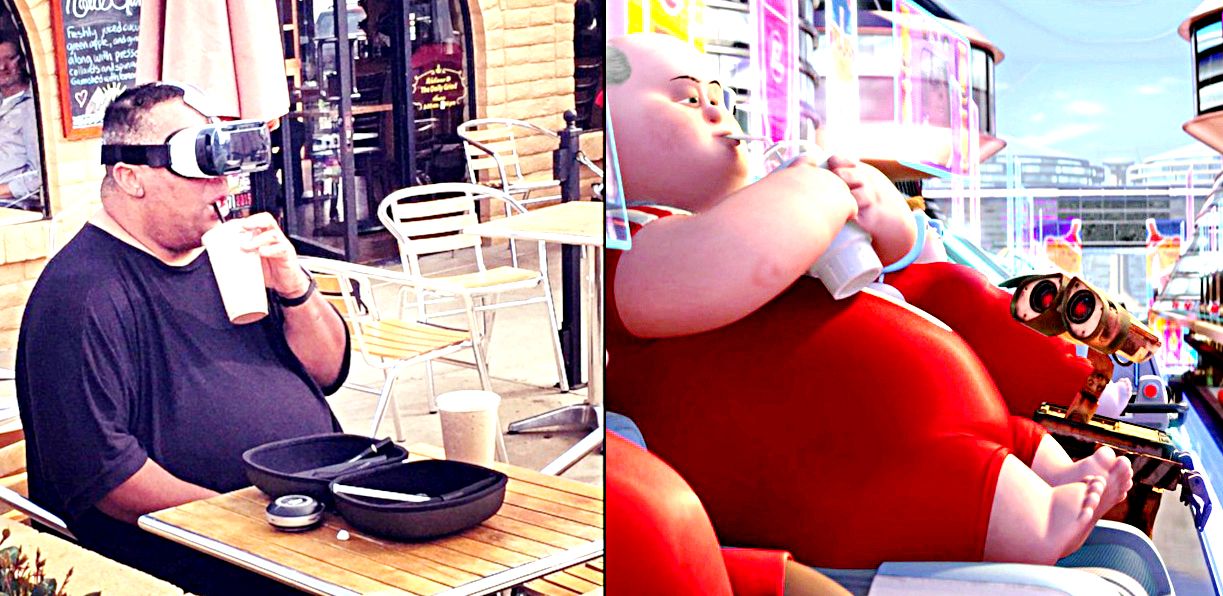
Have we reached utopia yet?
While reading online articles and stories, I often come across comments made by people who rarely supply their real name yet leave a lasting impression by adding something valuable to the main topic.
For no reason other than wanting to collect such gems, I copy and paste the most interesting into a Word document without concern for organisation or categorisation. Some comments are funny, some tongue in cheek, and others are insightful, at times unsettling.
Occasionally, I revisit my collection and discover interesting patterns that tell an unexpected story. This essay is one example of what can emerge. In this exercise, the comments portray a way of life and thinking that very few would recognise today. The intention is not to suggest that life was all beer and skittles fifty plus years ago. In fact, aspects of it were arduous and of necessity, pragmatic. Yet despite the difficulties, it was possible to find joy in the little things and aspire to a pleasant, moderately principled life.
The order of the comments roughly aligns to their related years. Most are unedited, some I added to; others I reduced to save space or mixed around to avoid repetition. Regardless, their intended meaning has not changed. Some readers may recognise their own comments in the pages below. Hopefully, PPs may have more to add at the end of the essay.
When the Terms Green and Recycled meant Something Else
In the forties and fifties it was possible to return empty milk bottles, soft drink bottles, and beer bottles to the shops. They in turn sent the bottles back to the manufacturing plant to be washed, sterilised, and refilled. Well before recycling became popular, beverage bottles were reused many times over. If the milk was home delivered (in glass bottles with tinfoil tops), you left them out the next day for the milkman to take back to the factory. Before bottles, householders put out a billy tin with a lid, which the milkman filled with fresh milk. As kids, we collected discarded drink bottles and cashed them in at the corner store. The money bought Toffees, Gobstoppers, Bubble Gum, and some skyrockets to launch from empty milk bottles.
There were no childproof lids on medicine bottles because no one had tried to poison a stranger. Cupboard doors and cabinets had no safety hooks because parents left nothing dangerous inside them. When we rode our bikes, no helmets or shoes were required. No thought of taking risks entered our minds whenever we hitchhiked. We would leave home in the morning and play all day, as long as we were back when the streetlights came on. No one was able to reach us and yet we managed our needs perfectly well.

Shops were not huge impersonal warehouses where the customer must load everything into trollies. Much of what we purchased back in the forties and fifties was available in bulk, which made it possible to buy as much or as little as required. The supplies were stored in rows of wooden boxes with lift up lids. Brown paper bags attached to string loops hung close by and every box contained a metal scoop for filling the bags. Nearby was a convenient scale to check how much we had taken.
Plastic bags, styrofoam trays, vacuum packs, and cling wrap were unheard of.
Those same brown paper bags were repurposed numerous times, usually until they fell apart. One use was to pack our lunches for school. Another memorable use was as covers for schoolbooks. This ensured that public property (the books provided for our use by the school) was not defaced through our efforts to personalise as we could write and draw on the brown paper covers. Yes, the schoolbooks were returned at the end of year so that next year’s students could use them.
Even if the paper bags were not reused, no harm resulted. They quickly disintegrated in the compost boxes near the back fence or were thrown into the combustion stove, which not only boiled the kettle and cooked all our meals; it also supplied hot water for our showers and baths.
The introduction of supermarkets in the sixties changed everything about the way we shopped for groceries, fresh food, clothing, and hardware supplies. Today, after almost sixty years of accepting the supermarket way of shopping, we are forced through legislation to bring our own bags, because we are told plastic bags are not good for the environment.
Kids rode to school on bicycles, took the bus, or walked together as they gathered other schoolmates on the way. Very few multistorey buildings had lifts or escalators, but no one minded the extra effort needed to get to the right floor. Most certainly, children were not chauffeured to school or anywhere for that matter, particularly as occurs today where the car is often driven even 200 yards to buy a litre of milk.
Babies’ nappies were made of cloth and washed clean every day. No throw away disposables existed back then and therefore not dumped at the local rubbish tip (today, plastic bags are banned, but it is ok to throw disposables into the bin). Clothes were washed in a tub and the water wrung out by hand using rubber-coated rollers. They were dried on a line, not in energy-consuming machines. In reality, wind and solar power dried our clothes. Kids received hand-me-down clothes from their brothers or sisters, not always brand-new clothing. No one complained about this.

Most homes had one radio, unlike today where a TV can be in every room. If anyone was lucky enough to own a TV, the screen was the size of a handkerchief, not a football field. When cooking, there were no electric machines to chop and blend the ingredients for the night’s meal. Dirt was not removed from the floors using vacuum cleaners. Rugs were beaten to dislodge the dust and brooms swept away the rest. Washing machines and vacuums were luxury items because of their high cost. When we packaged a fragile item to send by post, we used crumpled up newspapers to cushion it, not styrofoam or plastic bubble wrap that today ends up in the rubbish tip.
We did not burn petrol just to cut the lawn. Human power was sufficient to operate a push mower. We exercised by working so we did not need to go to health clubs to ‘run’ on electric treadmills. Accountants and banks used adding machines, while we worked sums out in our heads.
Whenever we were thirsty, we drank water from a tap or fountain (even a hose) instead of using a cup or a plastic bottle. We refilled writing pens with ink instead of buying a new biro and replaced the blade in a safety razor instead of throwing away the whole utensil.
Each room in the house had one electrical outlet, not an entire bank of sockets to power a dozen appliances. Finding a street or building or a site of interest was not a problem as printed (reusable) maps invariably solved the problem. There was no need for an electronic gadget to receive a signal beamed from satellites 23,000 miles out in space in order to find the nearest leisure park. Just on the latter point, we had no need of leisure parks, as we were very good at entertaining ourselves.
It was a special treat to go to the picture theatre on Saturday and watch classic movies such as 20,000 Leagues Under the Sea, Treasure Island, Tarzan, and Smiley Gets a Gun. Who could forget the laughing kookaburra, the cartoons, and the serials at the Saturday matinees? Moreover, before each screening, we stood for “God Save the Queen”.
When Not having Much and Simple Views were OK
The FX Holden was everyone’s dream car. No one ever asked where the car keys were because they were always in the ignition, and the doors not locked. The car windscreen was cleaned, the oil checked, and petrol served without asking and without extra cost, every time. Even the front door of the house was left unlocked.

The summers flew by as our time was taken up with bike rides, street cricket, Hula Hoops, skating, visits to the pool (or the local creek), playing cowboys and indians, building billycarts, marbles, and camping in the bush. We played cricket and footy with no adults to help with the rules of the game. All that was required was a bat, a ball, and a rubbish bin. Cigarette cards pegged onto the wheel spokes transformed any pushbike into a motorcycle. Catching tadpoles could happily occupy an entire day. Playing war involved pretend guns, but required ‘real’ wooden swords. A friend was someone who kept company with you and shared trust and comic books. It was not odd to have two or three ‘best friends’.
Nearly everyone’s Mum was home when the kids returned from school. Most Mums did not have to work to help dad make ends meet (childcare costs did not exist). Mum cooked every night and nearly every meal was meat and three vegetables with a roast on Sunday. Usually lamb. Nobody told her that the meals were exactly what the “food pyramid” required. She just guessed.
A ‘race issue’ meant arguing about who ran the fastest. Taking drugs meant swallowing half of one of Mum’s Bex powders for a headache. Coke had nothing to do with cocaine. We smoked fags (cigarettes) and were gay (happy). No one owned a purebred dog. Scalextric and meccano were the ultimate toys. Having a ‘weapon in school’ meant being caught with a shanghai (catapult). Decisions were settled on the spot by going ‘eeny-meeny-miney-moe’.
We never thought Noddy was gay and gollywog was not an offensive word.
When Family and Culture Meant Everything
My family have been here for 200 years and include many Anglos and Celts. We did the shitty jobs, the hard jobs, the white-collar jobs, political jobs, the union jobs, the capitalist jobs and been in most occupations and at all sorts of wealth levels. One generation of one branch owned a significant parcel of land in Sydney, another, a tiny store in rural Queensland. I consider this unsurprising given the number of ancestors that it takes to get to a person. My grandparents served in WWII and my grandfather’s brother died in France in 1917. Another generation served in Vietnam and I have relatives in the services today. Unfortunately, there are also dole bludgers.

For all the movements and changes it was not until the 1970s that the destiny of this country was evilly altered to undermine the foundation stones that built it – the European race. No good explanation was provided at the time and none has been provided since.
We now have a PM who implicitly states that none of my family’s history matters, and that if my own children are unable to secure a house or a job and struggle unnecessarily because he wants to flood the country with what he pretends are only economic units, he will not give a shit.
As I have been clearly told that my government owes no loyalty to me, I now owe no loyalty to my government. The craven worshippers of power who serve them are now my enemy.
Today, we are a nation of fractured groups and individuals; there is no national pride and as a result, no common cause.
When Economics Actually Worked and Made Sense
The wealth of a nation is the total productivity of its people. If I have gold and want you to fix my house, I give you gold for your labour. Thus, your wealth is your labour, and the gold is merely a medium of exchange. Therefore, it does not matter what the medium of exchange might be. You will give your labour provided you know someone else will accept the medium of exchange when purchasing something else.
The labour of the people and their productive capacity creates the nation’s wealth (not rising debt). Germany rose from the ashes in Europe to be the strongest economy without gold all on the back of the total productive capacity of its people.
The same is true for Japan and China. Where corruption prevailed as in Russia and they relied upon selling a commodity rather than the productive capacity of its people, then its economy did not soar as it did in Japan, Germany, and China. This also explains the third world status of South America and Africa.

When a country exploits its natural resources to gain wealth rather than educating its people, its long-term viability will diminish due to the reduction in the supply of its natural resources. Increasing the prices of such resources to compensate runs the risk of competition from cheaper alternatives as is occurring in the case of oil and technologies. If we do not get this fundamental principle correct, we destroy our economy with excessive taxation, which in turn, reduces the total productive capacity of the people.
When we Took Great Pride in Competence and Expertise
From David Hilton XYZ 14/12/18:
We are living in an age of incompetence and false expertise. It is a symptom of our imperial decadence, and a cause of our imminent collapse.
We have experts on ancient Roman Britain who say that Africans arrived in Britain before the English. We have Nobel laureate economists who could not foresee the Global Financial Crisis, then misdiagnosed it entirely when it arrived. We have influential education gurus who believe children should not be taught facts. We have prominent GP’s turned politicians who gained their public profiles by telling parents it is perfectly normal for babies to masturbate. See: https://www.youtube.com/watch?v=wYpb1REPjt4&feature=youtu.b
We have politicians that tell us Islam is a religion of peace, multiculturalism is good for the country’s prosperity, and terrorism is due to lone wolves suffering from mental issues. We are told our British ancestors invaded Australia and that aboriginals are helpless victims of genocide and oppression. Ethnic groups roam the streets at night causing havoc and violently attack innocent citizens. Yet we must believe that the reports are hype and there is no cause for concern. Sexual deviates now teach our children how to change their gender. Older white males are vilified for their evil, privileged worldview. All the while, no one can explain why household and national debt is rising or why there is no money to provide even the basic services.
When we Learned to Think for Ourselves
Before the introduction of Social and Emotional Learning (SEL) into schools, children and adults naturally acquired and applied the knowledge, attitudes, and skills needed to understand and manage emotions, set and achieve positive goals, feel and show empathy for others, establish and maintain supportive relationships, and make responsible decisions.
Although SEL promoters claim to achieve the above goals, in reality children are taught to feel and not to think. Of course, feelings in themselves are not bad or dangerous, but they can be when not tempered with a sense of right and wrong. Instead, traditional public schools, apparently determined not to teach history, how to read, spell, add, subtract, multiply, or anything useful, take on a role of psychotherapist (and not a good one).
The problem is not that children have emotions, but that government schools do not acknowledge that absolute truth, right, and wrong exists, let alone explain what truth, right, and wrong are. As a result, we have a bunch of kids trained to embrace their feelings — and since (it is claimed) feelings cannot be right or wrong, society devolves into chaos. As Brian Eno, an English musician and composer once stated so eloquently, “Feelings are more dangerous than ideas, because they aren’t susceptible to rational evaluation. They grow quietly, spreading underground, and erupt suddenly, all over the place.”

As we have seen over and over, the eruption of feelings at universities and schools has become all too common (particularly in America). Many younger people are products of a nihilistic society. They now feel emboldened to express their disagreement, even to the point of violence. This is because they have no sense of morality and have been told since kindergarten that their feelings are always valid.
It is not the kids’ fault, but if society continues to erode into a soulless, violent nation full of mob-like citizens who only feel and react like barbarians and do not think like civilised folk, we are all to blame. Traditional public schools, it has been decreed, do not have a place in teaching religion, morals, or anything that makes a strong, decent society, so we must ask ourselves: do they have a place in analysing the feelings and emotions of students — or even in society at all?
When Being Female did not Involve Feminism
How women have ‘progressed’ over the past century:
- Our great grandmothers had 12 kids
- Our grandmothers had 6 kids
- Our mothers had 2 kids
- Women of today have an abortion, a dog, and/or:

Somehow, the politicians argue, immigration and multiculturalism will make up for the falling birth rates and (wait for it), assist to turn the economy around to ensure prosperity (and peace and harmony) for all.
When did Life Stop Making Sense?
To close, here is the last comment. In this modern, highly ‘progressive’ age, anti-shark cull protests draw much larger crowds than anti-abortion rallies.
Comments
A Collation of Comments that Yell All is not Well — No Comments
HTML tags allowed in your comment: <a href="" title=""> <abbr title=""> <acronym title=""> <b> <blockquote cite=""> <cite> <code> <del datetime=""> <em> <i> <q cite=""> <s> <strike> <strong>